The EU Regulatory Framework for Digital Product Passports
With the entry into force of the Ecodesign for Sustainable Products Regulation (ESPR) on July 18, 2024, the European Union has taken a major step forward in its sustainability policy. Under this Regulation (EU) 2024/1781, the Digital Product Passport (DPP) has been made mandatory. The DPP thus serves as the primary instrument to enforce transparency regarding product sustainability across the EU internal market.
ESPR — Ecodesign for Sustainable Products Regulation (EU) 2024/1781
This overarching regulatory framework establishes the foundation for the Digital Product Passport (DPP). The regulation defines the general data requirements and obligations. Furthermore, the ESPR introduces the mechanism for delegated acts, which the European Commission will use to issue product-specific rules in the coming years. The regulation applies to all products placed on the EU market, regardless of whether they were manufactured inside or outside the EU. These product-specific rules will be published progressively through a rolling schedule running until 2030.
Battery Regulation — Regulation (EU) 2023/1542
This marks the first concrete DPP mandate for a specific product category. As of February 2027, battery passports will be mandatory for industrial batteries with a capacity exceeding 2 kWh and for all EV (Electric Vehicle) batteries. The passport must include life-cycle carbon footprint declarations, targets for recycled content of critical minerals, state-of-health metrics, and supply chain due diligence documentation.
AGEC — French Anti-Waste and Circular Economy Law
Unlike the upcoming EU legislation, this French national regulation is already in force. The AGEC law requires brands selling textiles in the French market to disclose comprehensive environmental and social information. WebIQ includes standard AGEC-compliant templates, enabling clients in the fashion and apparel sector to meet these requirements immediately.
Toy Safety Regulation (EU) 2025/2509
Alongside the Battery Regulation, this is the first sector-specific legislation to explicitly introduce DPP obligations. This signals a clear trend: the European Union is actively expanding the overarching DPP mandate from the ESPR into product-specific legislation.
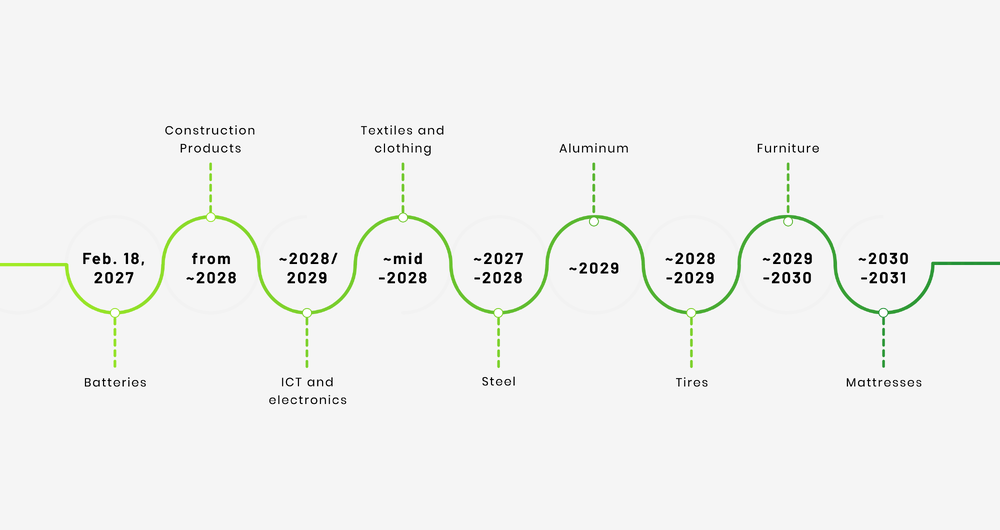
Requirements vary by product category and are specified in delegated acts. Based on the current ESPR text and early implementing acts, a compliant DPP is expected to include:
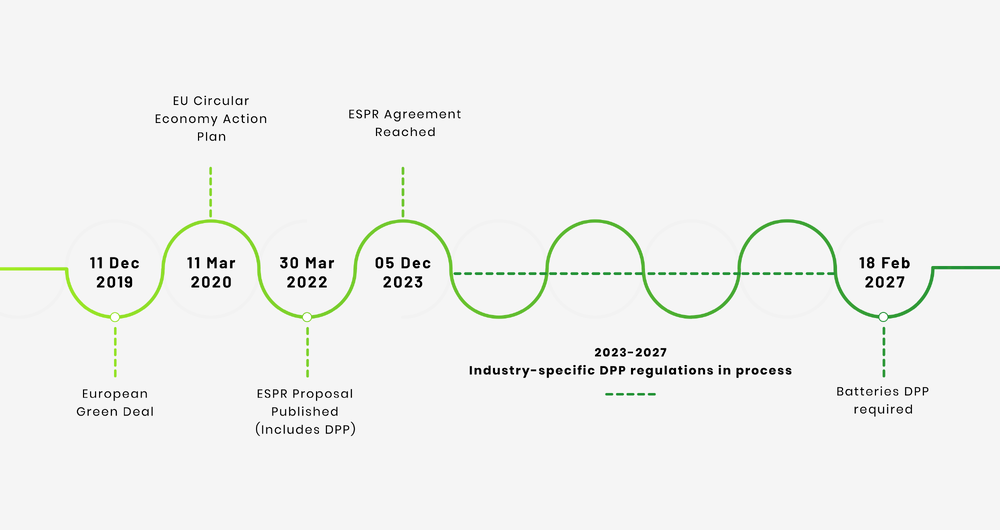
WebIQ continuously monitors ESPR delegated acts as they are published by the European Commission. Once the requirements for a specific product category are finalized, the relevant data templates and export formats are automatically updated within the platform. These updates roll out seamlessly to customer dashboards, completely eliminating the need for manual configuration.
Our dedicated compliance team closely tracks key regulatory milestones, focusing on:
For businesses navigating complex regulatory landscapes, our specialized team provides tailored compliance advisory. We identify exactly which requirements and timelines impact your specific product portfolio, ensuring your resources are deployed where they deliver the highest value.

